Graves Behind the House: The Yin-Facing-Yang Arrangements
Chinese practice distinguishes yang dwellings — houses for the living — from yin dwellings, which are graves, and has a good deal to say about what happens when the two are close. Yin gan yang (阴赶阳), 'yin driving out yang', names the situation where burial ground stands behind or opposite a house, and the tradition sorts it into configurations rather than treating it as one undifferentiated problem.
Yin dwellings and yang dwellings
The division is one of the oldest organising distinctions in Chinese geomancy. Yinzhai concerns the siting of graves; yangzhai concerns the siting of houses; the two share a method and a compass but are different disciplines with different criteria. What a grave wants — quiet, backing, seclusion, a dry stratum — is not what a house wants, and the practitioners who specialise in one often do not take work in the other. The trouble arises at the boundary, when land that was one becomes the other, which in rapidly urbanising China has happened on an enormous scale.
The four configurations
Practitioners distinguish by position. Graves directly behind a house are read as the most serious, because the rear is where a dwelling wants its support and backing onto yin ground is held to reverse that. Graves alongside are read as moderate and dependent on distance. Graves in front but across an open space with a road or water between are read as least concerning, and some practitioners treat a clear separation as neutralising. Graves below, on a slope beneath a house, are read according to drainage and sight line. In every case the assessment asks the same three questions: how far, how visible from the rooms people live in, and is there anything between.
What people are actually reacting to
It is worth separating this out honestly. Living beside a cemetery involves: a view that many people find oppressive from a bedroom or kitchen window; a documented effect on resale value in Chinese-speaking markets, where a large share of buyers will not consider such a property; often, low-lying or shaded ground, since burial land is frequently the land that was not wanted for building; and in older village settings, genuine drainage and damp problems on that ground. None of that requires a metaphysical account, and all of it is what a family asking about a house next to graves is actually asking about.
Ground that used to be a cemetery
The commoner modern case is not a house next to graves but a house on ground that once held them — cleared, relocated and redeveloped, often within living memory, sometimes with a green strip left where the burials were. Chinese practice treats this seriously and the customary response is an offering or a rite performed before building or before moving in, addressed to whoever was there. Whatever one makes of the metaphysics, the social function is legible: it acknowledges publicly that the ground had a prior use and that the people who were moved were somebody's family. That acknowledgement is often the whole of what a household actually wants.
Fiction · Tales of the Hidden Path
The Damp Patch
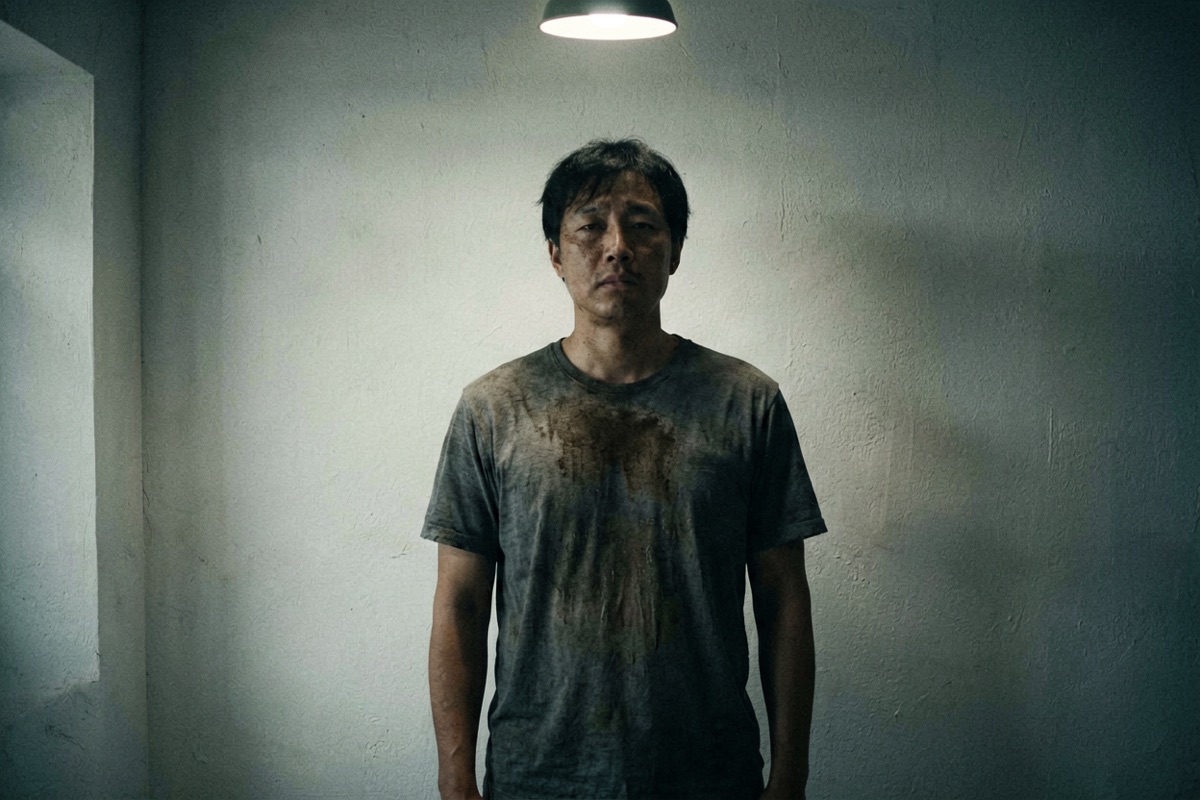
The green strip behind the house was a burial ground until the eighties. They cleared it before he was born.
On the inside of the back wall there is a damp patch about a person's height, narrower at the top than at the bottom.
Every summer he paints it out. White, two coats. It comes back the following year the same shape.
He photographs it, once a year, same position, same angle. He has six.
Overlaid on the computer, the six outlines match to under a centimetre.
The seventh was wrong.
Shorter. Narrower at the shoulders.
The eighth, shorter again.
He lined all eight up by year and measured each one, writing the heights out: one seventy-two, one seventy-two, one seventy-two, one seventy-two, one seventy-two, one seventy-two, one forty-nine, one ten.
His son is seven. They marked his height on the door frame the day before yesterday. One ten.
An original short story written for our folklore film series. It is fiction — invented, not a recorded case, not a claim about how any of the customs above actually work. The belief it is built on is real; everything that happens in it is not. See our honesty policy。
The other half of the discipline. What yinzhai practice asks of a burial site, and why the two disciplines want different things.
How Graves Are Sited →FAQ
Is it bad to live near a cemetery?
Tradition treats it seriously, with graves directly behind the house read as the most serious configuration and graves in front across an open space as the least. In practice the considerations are outlook, resale, and often the drainage of low-lying ground.
What are the four configurations?
Behind, alongside, in front, and below. Assessment asks the same three questions in each case: how far away, how visible from the rooms people use, and whether anything stands between.
What about a house built on a former cemetery?
This is the commoner modern situation. Chinese practice treats it seriously and the customary response is an offering or rite before building or moving in, addressed to those who were there.
Does distance neutralise it?
Practitioners generally say a clear separation — a road, a watercourse, an open space, or a substantial distance — greatly reduces or removes the concern, particularly for graves in front rather than behind.
Related: The Beam Overhead: Why Feng Shui Moves Your Bed · Glare Sha: When the Building Opposite Throws Light Into Your Home · Free BaZi Calculator · Free I Ching Reading