Ce Zi: Divination by Taking a Character Apart
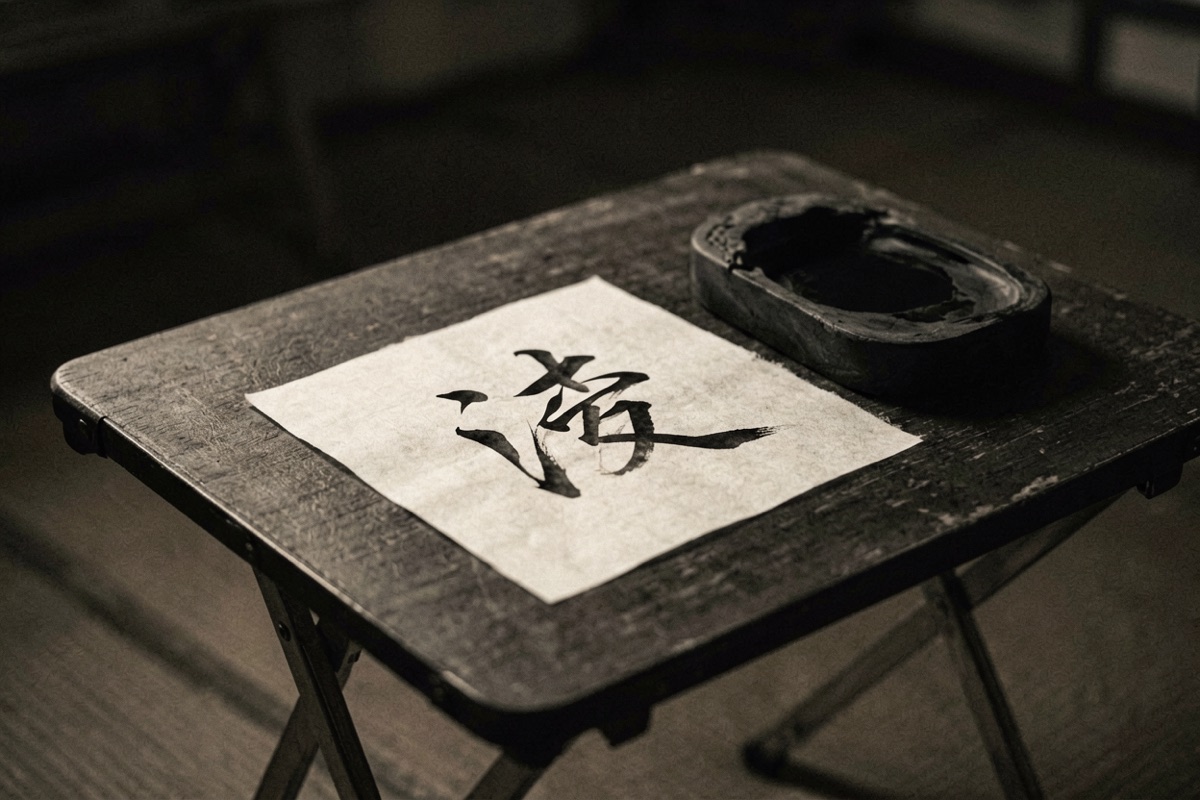
Ce zi (测字), also called xiang zi (相字), is the most distinctively Chinese of all divination methods, because it could not exist in any other script. You write one character. The diviner takes it apart — components, radicals, stroke count, what it resembles, what it could become with one stroke added — and reads the answer out of the pieces.
Why the script makes it possible
Chinese characters are compounds. The great majority are built from a semantic component indicating a field of meaning and a phonetic component indicating sound, and the same components recur across thousands of characters. This means any character can be decomposed, and the pieces mean things on their own. A diviner who separates a character into its parts is not inventing a procedure — they are running the writing system backwards. Nothing equivalent is available in an alphabetic script, where the letters of a word carry no meaning individually.
The moves
The classical repertoire is small and combinable. Decomposition: split the character and read the parts. Addition: note what it becomes with one more stroke or component. Subtraction: note what remains if part is removed. Substitution: note the near-neighbour characters. Stroke count: read the number against the trigrams or the elements. Resemblance: read what the written shape looks like. And, importantly, the circumstances — how the character was written, how firmly, whether the brush faltered, what happened in the room at that moment. The last of these connects ce zi to the plum-blossom method's doctrine of external response.
What the diviner is actually doing
Ce zi is the Chinese divinatory art in which the practitioner's role is most visible and least deniable. The character is fixed; everything else is selection. A skilled diviner chooses, from the several readings any character permits, the one that speaks to the question the querent asked and the state they are in — and the querent supplied the character, so the material is already theirs. The result at its best is a reading that feels uncannily specific and is in fact a piece of collaborative interpretation. That is not a debunking. It is a description of what the art is, and the good practitioners have always known it.
Writing the character
The instructions given to a querent are consistent: write without deliberating, write the first character that comes, and write it yourself. A character chosen after two minutes of thought is a character about what you want the answer to be. The tradition also treats the written trace as data — pressure, hesitation, a stroke gone wrong, a character written larger or smaller than intended. Whether that carries the significance claimed is not testable; that a person's handwriting under pressure differs from their handwriting at rest is not in dispute by anybody.
Fiction · Tales of the Hidden Path
The Character
The diviner works at the west end of the market. Folding table, a sheet of glass over the top with old newspaper pressed underneath it. Brush. Squares of paper cut eight centimetres to a side.
The first time he wrote 安. The diviner said: a roof, and a woman under it. There is someone at the centre of that house. How many of you live there?
One, he said.
The second time he wrote 問. Ask. The diviner said: a mouth inside a gate. Someone inside the gate is talking.
The third time he wrote 閒. The diviner said: the moon inside a gate. Light is coming through the gap. Do you shut your door at night?
He said yes.
The fourth time he did not want another gate. He thought about it for a while and wrote 永. Eternal. Nothing to do with doors.
The diviner looked at it a long time, put the brush down, and said: that is the character for water with one stroke added. Where the water is, the gate is.
He went home. There was no water in the house. It rained the next day, all day.
Six months later he went back and the diviner was gone; the son had taken over the pitch. The son said his father had left something for him and nobody had come for it.
Four sheets of paper, held together with a clip, in order. His father kept a copy every time.
The son stacked the four and held them up to the sun.
Overlaid, the four characters make one character. It is the family's surname.
An original short story written for our folklore film series. It is fiction — invented, not a recorded case, not a claim about how any of the customs above actually work. The belief it is built on is real; everything that happens in it is not. See our honesty policy。
Our free tool runs the classical dissection on the character you write — components, element, and a reading against the matter you are asking about.
Try Free Character Divination →FAQ
What is 测字?
Divination by writing a single character and dismantling it — components, stroke count, resemblance, what it becomes with a stroke added or removed — and reading the result against the question.
Could this work in English?
Not in the same way. Chinese characters are compounds whose components carry meaning independently, so decomposition yields meaningful pieces. Letters in an alphabetic script do not.
How should I choose the character?
Write the first one that comes, without deliberating, and write it yourself. A character selected after careful thought is a character about the answer you want.
Is the diviner just interpreting freely?
Largely, and the good ones say so. The character is fixed and everything after it is selection. What makes it work is relevance to the question — and you supplied the character, so the material was already yours.
Related: Chinese Palm Reading: The Three Main Lines · The Outer Response: Divination That Uses the Room · Free BaZi Calculator · Free I Ching Reading