Chinese Palm Reading: The Three Main Lines
Chinese palm reading, shou xiang (手相), is the sibling of face reading and shares its method: the hand is treated as a map with named regions and lines, and the reading proceeds by describing what is actually there. Three lines carry most of the interpretation, and the one everybody asks about is the one most often misunderstood.
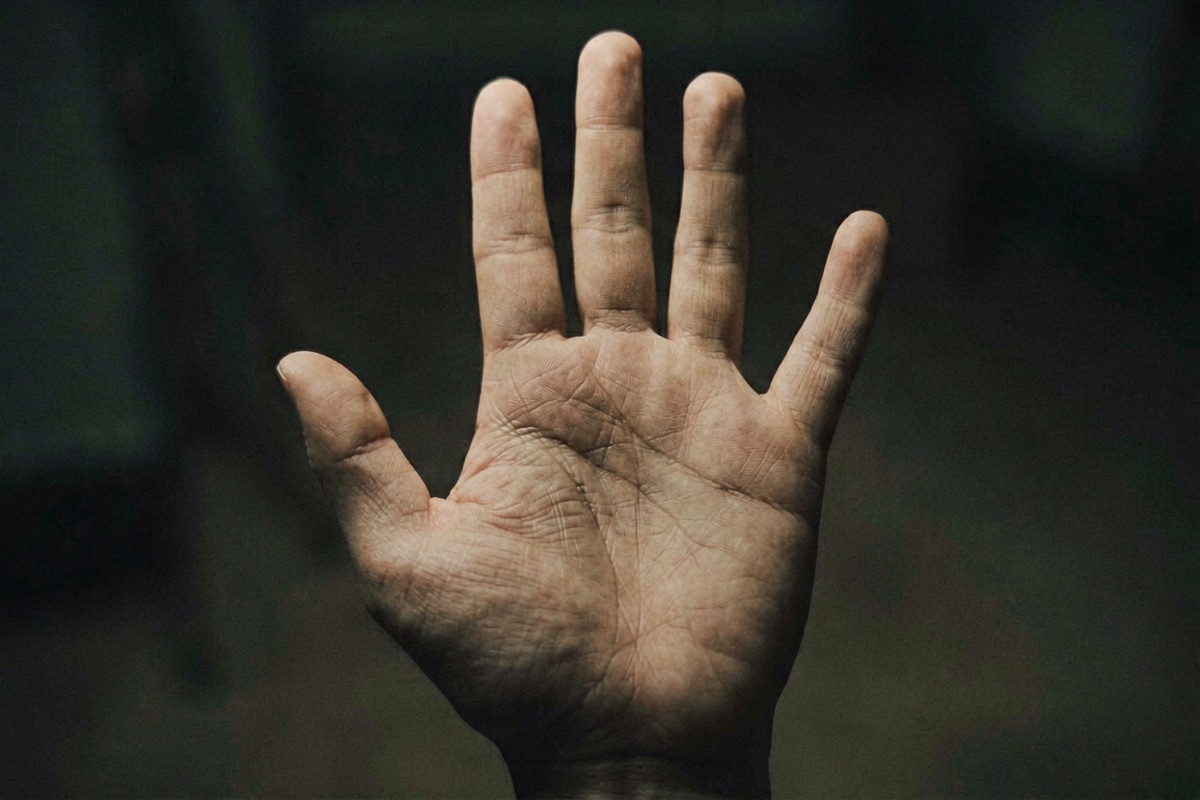
The three lines
The life line curves around the base of the thumb, enclosing the mount beneath it. The head line runs across the palm from the edge between thumb and forefinger. The heart line runs above it, from the outer edge toward the fingers. Chinese practice reads each for clarity, depth, length, continuity, branching and colour, and reads the relationships between them — where they start together, how far apart they run, whether they cross. Beyond the three, practitioners consider the mounts, the palm's overall proportion, the fingers, and the hand's temperature and flexibility.
The life line does not measure life
This deserves stating flatly because it causes real distress. A short life line does not mean a short life, and a break in it does not mean an accident. The classical reading is of constitution and vitality — how robust the body is, how it recovers, how much reserve there is — and Chinese sources are consistent about this. The 'length equals lifespan' idea is a modern popular corruption, spread by simplified magazine palmistry. Anyone who tells you your life line shows how long you will live is either badly informed or hoping you will pay them to fix it.
How it differs from Western palmistry
The systems overlap because they are both looking at the same hand, but they differ in emphasis. Western palmistry gives the mounts their planetary names and builds heavily on them. Chinese practice sits inside the wider apparatus of Chinese physiognomy: the palm is divided by the eight trigrams, the five elements are applied to hand shape, and the reading is expected to agree with the face reading and, where available, the birth chart. Chinese practitioners also weigh both hands, conventionally taking one as inherited and the other as made — the assignment varies by school and by sex, and no school is authoritative.
Lines do change
One point on which the tradition and dermatology agree: palmar creases are not fixed. Major flexion creases form before birth, but their appearance changes over a lifetime with use, weight, hydration, age, manual work and injury, and the fine secondary lines change a great deal. Chinese practitioners have always said the hand changes as the person does, and treat re-reading an old client as worthwhile. This is one of the more attractive features of the tradition — whatever one makes of the interpretation, the underlying claim that a hand records a life is straightforwardly true, and a manual worker's palm at sixty is a document.
Fiction · Tales of the Hidden Path
The Line
He read hands for thirty years and never read his own. The trade says you cannot read yourself accurately.
At fifty-six he looked.
There is a break in the middle of the life line, two or three millimetres, the two ends offset.
He noted the position: forty-one millimetres up from the wrist crease.
Six months later he measured again. Thirty-eight.
So he started photographing it. First of every month, left hand flat, desk lamp raking across it, phone on a tripod at the same distance.
Twelve photographs. The break moved from forty-one to twenty-nine, a millimetre and a bit a month, evenly.
He worked out when it would reach the wrist crease. Measured with a ruler, counted back on a calendar, did it twice.
It is not travelling toward the fingers. It is travelling toward the wrist. Toward where the line begins.
He dug out the photographs from his childhood. There is one at five years old, the day they set out objects for him to choose from, his hand flat on a red cloth, very clear.
There is no life line on it. The palm is clean. There are two.
An original short story written for our folklore film series. It is fiction — invented, not a recorded case, not a claim about how any of the customs above actually work. The belief it is built on is real; everything that happens in it is not. See our honesty policy。
The hand's companion discipline. The three divisions of the face, the five features, and what the tradition reads into each.
Face Reading (Mian Xiang) →FAQ
Does a short life line mean a short life?
No. The life line is read for constitution and vitality — robustness, recovery, reserve. The lifespan idea is a modern popular corruption and is not supported by the classical sources.
Which hand should be read?
Chinese practice reads both, conventionally taking one as what was inherited and the other as what has been made of it. Which is which varies by school and by sex, and no school is authoritative.
Do palm lines change?
Yes. The major creases form before birth but change in appearance with age, weight, work and injury, and the fine secondary lines change considerably. The tradition has always said the hand changes as the person does.
How does it relate to face reading?
Both belong to Chinese physiognomy and are expected to agree with each other, and with the birth chart where one is available. A reading from one that contradicts the others is treated as a reason to look again.
Related: Ce Zi: Divination by Taking a Character Apart · The Outer Response: Divination That Uses the Room · Free BaZi Calculator · Free I Ching Reading