Borrowed Mouths: Spirit Mediums Who Speak for the Dead
Across southern China, Taiwan and the Chinese diaspora, a family who needs to ask a dead relative something can, for a fee, go and ask them. Wen mi (问米) in Cantonese practice, guan wang (关亡) in the Mandarin term, is a session in which a medium is entered by the deceased and speaks in their voice. It is a living institution, not a historical curiosity, and it has its own etiquette — including tests.
How a session runs
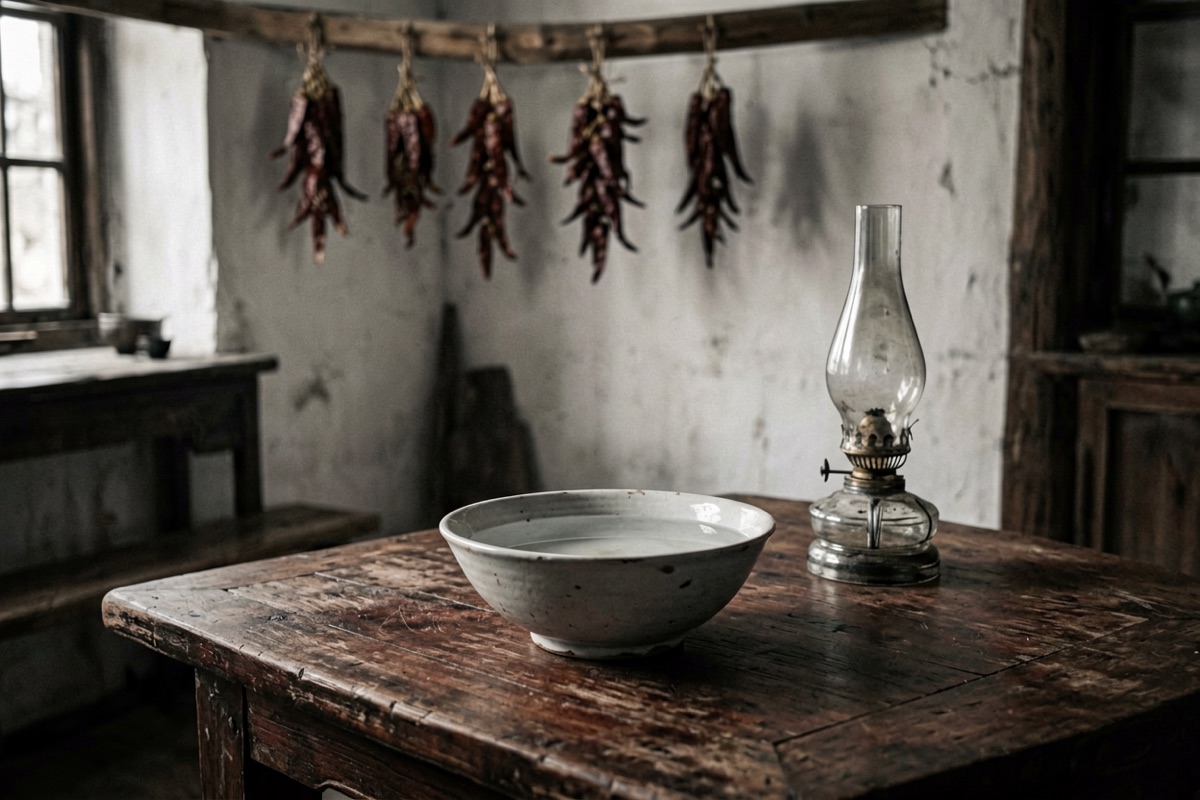
The setting is domestic: a front room, an altar, incense, a bowl. The client provides the deceased's name and dates and states who they are. The medium sits, incense is lit, and after an interval — sometimes marked by yawning, shivering or a change in breathing — the voice changes. What follows is conversation. The dead complain about their grave, ask after grandchildren, settle an argument about a will, or say the thing the family has come to hear. Sessions typically run under an hour and are paid for at a modest fixed rate. The name wen mi, 'asking the rice', refers to the bowl of rice used in the Cantonese form, into which the medium is said to look.
Mediums, and the temple kind
It is worth separating two roles that outsiders routinely conflate. The wen mi medium works privately, is usually a woman, and is entered by ordinary dead people at the request of their families. The tang-ki (童乩, 'divining child') of Fujianese and Taiwanese temple religion is entered by a god, performs publicly at festivals, often in trance processions, and in some traditions demonstrates the god's presence through self-mortification with spiked balls, swords or skewers — a practice extensively documented at temple festivals in Taiwan and Singapore. The first is a private consultation about grief; the second is public liturgy about divine presence. Both are called spirit mediumship in English, and they are not the same job.
The tests families use
Chinese clients are not, as a rule, credulous about this, and the folklore surrounding wen mi is largely composed of tests. Ask about a childhood nickname nobody outside the family used. Ask where a specific object was kept. Ask about a quarrel that was never spoken of outside the house. A common instruction in the folk accounts is simply to keep asking — the traditional claim being that whatever is speaking will run out of answers before a real relative would. This scepticism is not modern and not Western; it is built into the practice, and the mediums themselves generally accept it. A session that fails a family's questions is a session the family stops paying for.
What is actually happening
The honest account has several layers and does not require dismissing anyone. Some mediumship is straightforwardly cold reading, and the technique is well documented: broad statements, watching the client, letting the family supply the specifics and then feeding them back. Some is dissociative, and the anthropological literature on trance states treats it as a genuine and culturally shaped altered state rather than a performance. And underneath both is the reason people go: there is something they did not get to say. Judged as a way of learning facts, wen mi has nothing to recommend it. Judged as a structured hour in which a bereaved family speaks out loud to someone they have lost, it is doing something that very few other institutions offer at all.
Fiction · Tales of the Hidden Path
Borrowed Mouth
The woman began speaking in other people's voices. Men's voices, old people's voices, voices with accents from three counties over, saying things about debts and fields and a child's name that she had no way of knowing.
The old people in the village called it a borrowed mouth, and told her husband what to do about it. Stand behind her. Hold a bowl of water. Ask it who it is, and keep asking, because it will run out of answers before a person would.
So he stood behind her in the lamplight with the bowl held level in both hands and asked.
Who are you.
And something answered, in a voice not hers.
Who are you.
And something else answered.
The wick burned down and the room got smaller around the light, and he kept asking in the same flat rhythm, and the answers got shorter, and his hands went white at the knuckles from holding the bowl.
The seventieth time he asked, nothing answered at all. The water in the bowl was perfectly still.
Her shoulders moved. She turned her head and said, in her own ordinary voice: why do you keep asking me that?
He let his hands down and set the bowl on the table, and the base of it knocked against the wood.
In the water, two people were reflected. His wife, turned in her chair, looking up. And behind her, still standing, still holding a bowl.
An original short story written for our folklore film series. It is fiction — invented, not a recorded case, not a claim about how any of the customs above actually work. The belief it is built on is real; everything that happens in it is not. See our honesty policy。
The other way Chinese practice asks a question and gets an answer — the bamboo cylinder, the moon blocks, and the fortune poem.
Temple Divination Explained →FAQ
What does 问米 mean?
Literally 'asking the rice', from the bowl of rice used in the Cantonese form of the practice. It refers to a session in which a medium is entered by a named deceased person and speaks for them.
Is a tang-ki the same as a wen mi medium?
No. A tang-ki is entered by a god and performs publicly in temple religion, sometimes with self-mortification. A wen mi medium is entered by an ordinary deceased person in a private consultation for their family.
How do families check whether a session is genuine?
By asking about things only the deceased could know — nicknames, hidden objects, private quarrels — and by continuing to ask. Scepticism is built into the tradition rather than imported into it.
Does daoism5049 offer contact with the dead?
No. We perform memorial and dedication rites and say plainly what they are. We do not claim to relay messages from anyone, and we would advise caution toward anybody who does.
Related: Foundation Sacrifice: The Bridge That Needed a Name · The Shadow: Chinese Beliefs About What Follows You · Free BaZi Calculator · Free I Ching Reading