Sky Slice Sha: The Gap Between Two Buildings
Tian zhan sha (天斩煞), the 'heaven-cleaving sha', is the narrow slot of sky between two adjacent tall buildings, and the complaint arises when that slot lines up with your window or front door. Of all the classical form sha, it is the one with the most direct and least mystical physical basis, and anyone who has walked between two towers on a windy day already knows what it is.
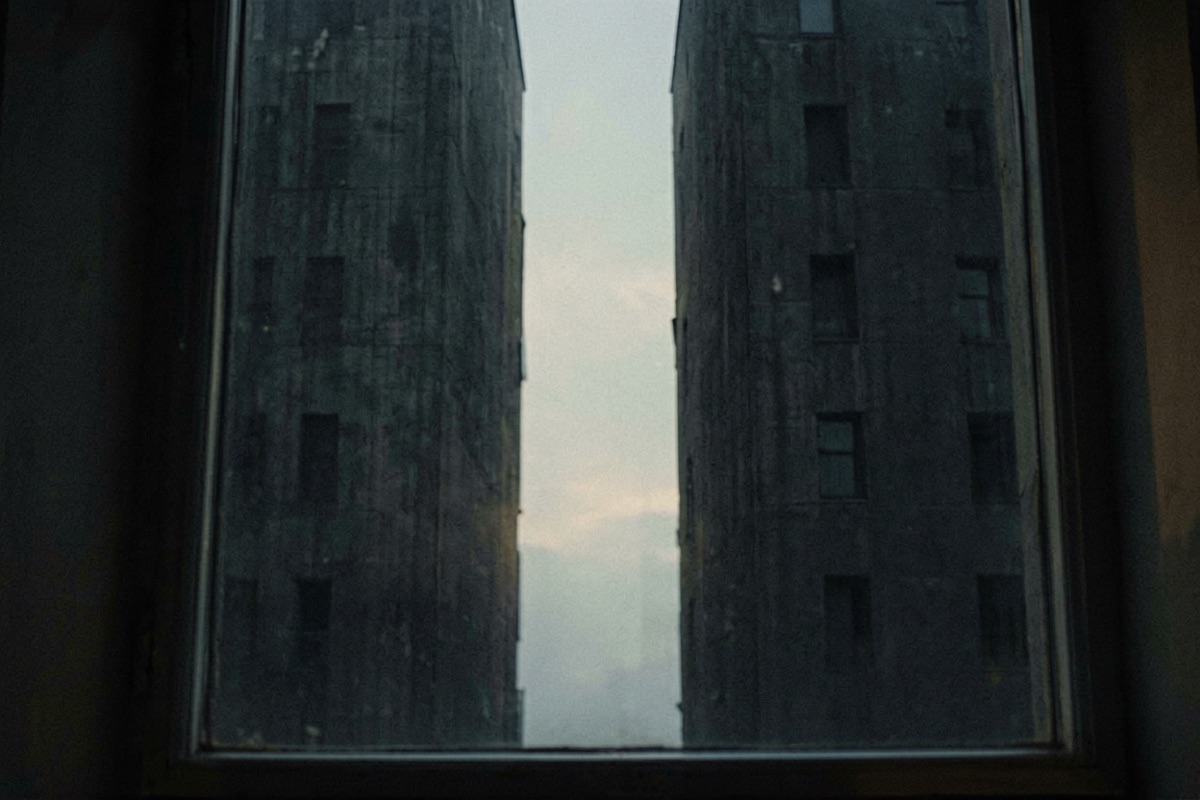
What is being described
The image the name carries is a blade of sky coming down between two masses, and the tradition treats the alignment as the whole of the problem: a gap that does not point at you is not your concern. Severity is assessed by proximity, by how narrow the slot is relative to the buildings' height, and by whether the alignment is with a main door, a bedroom window or a less-used opening. Practitioners rank it among the more serious of the form sha, and where it is identified they will usually recommend something be done rather than watched.
Wind, actually
The physics is standard and taught in every building-aerodynamics course. A tall slab intercepts a large volume of moving air; where two slabs stand close, flow is forced through the gap and accelerates, and the wind speed in the slot can substantially exceed the ambient speed. Related effects — downwash bringing high-level wind to street level, corner acceleration, vortex shedding — make the ground-level environment around tall buildings a genuine engineering discipline. Cities now routinely require wind studies for tall developments because pedestrian-level wind can become dangerous. A tradition that identified 'the gap between two towers' as a place of cutting force located a real phenomenon with the vocabulary it had.
What it feels like indoors
A dwelling with a window facing an accelerated flow gets: persistent draught even with the window shut, whistling around frames and seals, rattling, wind-driven rain reaching the facade harder, and dust and debris carried in. Long-term occupants report that the draught is worst at certain times of day, which follows the prevailing wind. The complaints people bring to a practitioner about a tian zhan sha property — cannot keep the place warm, cannot sleep for the noise, dust everywhere — are the complaints a building surveyor would predict from the same geometry.
Remedies
Real ones first. Improved glazing and seals; heavy curtains; an internal screen or partition breaking the line from the opening; planting or a solid screen outside where the property allows; and reorienting the room so that no bed or seat sits in the draught path. Traditional cures — the bagua mirror facing the gap, the pair of qilin, a screen wall — are offered where the physical route is closed, and even practitioners who use them will describe them as secondary. As with the beam and the glare, the ordering of the remedies is the most informative thing about the tradition's own view of the problem.
Fiction · Tales of the Hidden Path
The Draught
There is a gap between the two blocks opposite, about forty centimetres wide, and it lines up with his north window.
There is always wind in it.
Dust settles on the windowsill, and there is one band across the middle of it that stays clean. Two fingers wide, running from the inside edge of the sill straight out to the outside edge.
He sealed the window. Two runs of silicone, foam strip in the gaps, expanding filler injected and left to swell.
The dust still settled. The band was still clean.
He wiped the sill down and dusted a thin layer of flour across it.
In the morning the band was bare. There were fine striations along both of its edges where something had pushed the flour aside.
He tore off a strip of paper, held it by one end, and lowered it slowly onto the clean band.
The paper lifted.
Outward. The wind was going from the room into the gap.
An original short story written for our folklore film series. It is fiction — invented, not a recorded case, not a claim about how any of the customs above actually work. The belief it is built on is real; everything that happens in it is not. See our honesty policy。
The thirteen classical forms, how each is identified, and the tradition's own order of preference among the remedies.
Sha Qi and Its Cures →FAQ
What is 天斩煞?
The narrow gap between two adjacent tall buildings, when it aligns with your window or door. The name means 'heaven-cleaving'. Alignment is the whole of the complaint — a gap not pointing at you is not the issue.
Is there a real basis for it?
Yes, and it is the clearest case among the form sha. Flow forced between two tall slabs accelerates, sometimes well above ambient speed. Cities require pedestrian wind studies for tall buildings for this reason.
What are the symptoms indoors?
Persistent draught with windows shut, whistling and rattling at frames, wind-driven rain hitting the facade harder, and dust carried in. Worst at particular times of day, following the prevailing wind.
How is it remedied?
Glazing and seals, heavy curtains, an internal screen breaking the line, external planting or screening, and moving beds and seats out of the draught path. Symbolic cures are used where the physical route is closed.
Related: The Beam Overhead: Why Feng Shui Moves Your Bed · Glare Sha: When the Building Opposite Throws Light Into Your Home · Free BaZi Calculator · Free I Ching Reading