Peng Zu's Hundred Prohibitions: One Rule for Every Day
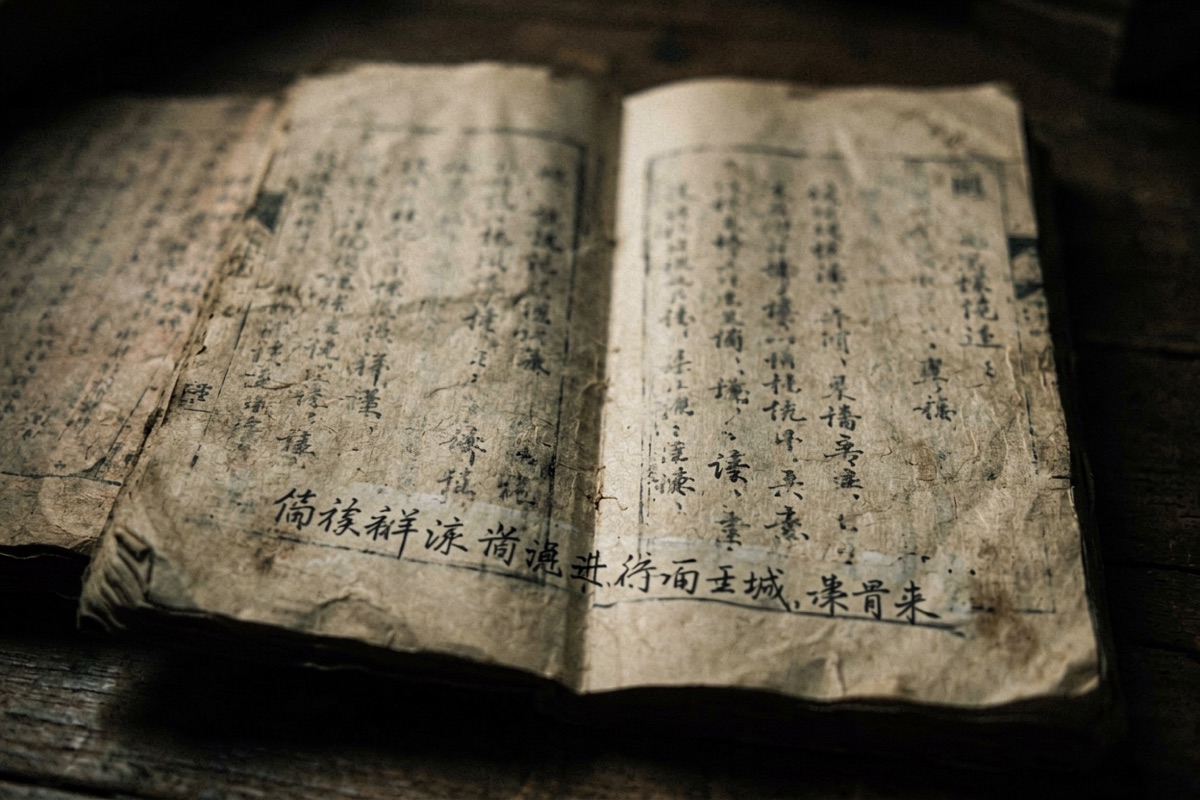
Among the columns in a Chinese almanac is a pair of short lines beginning with the day's heavenly stem and earthly branch: 'jia does not open the granary — goods will be scattered'; 'zi does not litigate — the matter will not be resolved'. These are the Peng Zu bai ji (彭祖百忌), the hundred prohibitions of Peng Zu, one of the neatest pieces of traditional Chinese daily practice.
How the set works
Ten stems, twelve branches, one prohibition each. The stem lines cover activities: opening a store, planting, work on the stove, litigation, sacrifices, travel. The branch lines cover their own set. Because every day in the sexagenary calendar carries one stem and one branch, every day arrives with exactly two prohibitions, and the pairing shifts through the sixty-day cycle so that no two consecutive days carry the same pair. The whole set fits on a single page, which is one reason it survived — it is short enough to be printed in the margin of anything.
The form of the lines
Each is built the same way: the stem or branch, the negated activity, and the consequence, in four to six characters. Jia does not open the granary, for goods will be scattered and lost. Yi does not plant, for a thousand seedlings will not grow. Bing does not work on the stove, for the kitchen god will be displeased. Ding does not shave the head, for a boil will form. The consequences are concrete, domestic and immediate rather than cosmic, which tells you what the set was for: it is a working farmer's and householder's list, not a philosophical one.
Peng Zu
Peng Zu is the Chinese Methuselah — a legendary figure said to have lived eight hundred years, credited in various traditions with expertise in nourishing life, dietetics, breathing and sexual hygiene, and invoked as the patron of longevity practices. Attributing the daily prohibitions to him gives the list the authority of someone who evidently knew how to avoid dying. Whether any of the prohibitions has anything to do with the historical layers of Peng Zu material is doubtful; the attribution works the way such attributions usually do, as a stamp rather than a citation.
What they are used for now
Consulting them for every activity has largely gone, but the set has not vanished. Construction is the strongest survival — contractors and clients in Chinese-speaking regions will check before breaking ground or raising a ridge beam. Farming persists in rural use for planting and slaughter. Family events check them alongside the day officer and the clash animal. Beyond that, the lines survive as an object of interest: twenty-two sentences that tell you, more directly than most sources, what a Chinese household two thousand years ago was worried about on any given morning.
Fiction · Tales of the Hidden Path
The Hundred Prohibitions
He lived by the Peng Zu prohibitions from the age of thirty-two. Which days not to open the store, which days not to plant, which days not to travel. Not one missed.
Twenty years without anything going wrong.
In March of the year he turned fifty-two he opened the almanac to that day's page and there was an extra line under the printed text. Handwritten, blue ballpoint, the ink fresh enough to smudge under his thumb.
It read: today, do not open boxes.
There is no such line in the Peng Zu set.
The next day it had changed: today, do not meet anyone coming from the east.
He began photographing it, one a day, into his phone.
Every line was a prohibition for that day and not one was from the original set. Small handwriting, squeezed into the white space under the print.
On the thirtieth day it read: today, do not turn the pages of this book.
He shut it, put it in a drawer and locked it.
In the morning the drawer was open, the book was on the desk, open at that page, and a new line stood under yesterday's: it was turned yesterday.
He carried down twenty years of almanacs from the loft, one a year, and turned every one of them to the same date.
There is a handwritten line under the print in every one. Twenty years, twenty sentences. The same hand throughout.
He sat with his own accounts book open beside them for half an hour, comparing.
It is his writing.
An original short story written for our folklore film series. It is fiction — invented, not a recorded case, not a claim about how any of the customs above actually work. The belief it is built on is real; everything that happens in it is not. See our honesty policy。
The other column that governs a day. Twelve officers rotating in fixed order, and what each one permits.
The Day Officers →FAQ
What are the Peng Zu prohibitions?
A set of twenty-two lines attaching one prohibition to each of the ten heavenly stems and twelve earthly branches. Every day carries a stem and a branch, so every day carries two.
Who was Peng Zu?
A legendary Chinese figure said to have lived eight hundred years, associated with longevity practices, dietetics and breathing. The attribution functions as a stamp of authority rather than a historical claim.
What does a line look like?
Stem or branch, negated activity, consequence: 'jia does not open the granary — goods will be scattered'; 'yi does not plant — a thousand seedlings will not grow'. Concrete and domestic rather than cosmic.
Does anyone still follow them?
In construction most visibly — contractors check before breaking ground or raising a ridge beam. Also in farming, and alongside other columns when choosing dates for family events.
Related: Waking at the Same Hour Every Night: The Meridian Clock Reading · Never Pick Up a Red Envelope From the Road · Free BaZi Calculator · Free I Ching Reading