Waking at the Same Hour Every Night: The Meridian Clock Reading
One of the most-searched questions about Chinese medicine has nothing to do with herbs: why do I wake at three o'clock every night? The tradition has an answer ready, because it divides the day into twelve two-hour periods and assigns each to an organ system. Three in the morning falls in the hour of the tiger, which belongs to the lung.
The twelve hours and their organs
The Chinese day divides into twelve double-hours, each named for an earthly branch, and the meridian clock assigns each to an organ system: lung 3–5am, large intestine 5–7, stomach 7–9, spleen 9–11, heart 11–1pm, small intestine 1–3, bladder 3–5, kidney 5–7, pericardium 7–9, triple burner 9–11, gallbladder 11pm–1am, liver 1–3am. Qi is described as circulating through the sequence, reaching each system at its hour. It is a tidy scheme, easy to remember, and it underlies a good deal of Chinese practice about the timing of treatment and of daily habits.
What waking in a window is read as
The readings follow the assignment. Waking between 1 and 3 is read toward the liver, and associated in the tradition with anger, frustration and alcohol. Between 3 and 5, the lung, associated with grief and with breathing. Between 5 and 7, the large intestine, associated with letting go. Practitioners use these as a starting point for questions rather than as conclusions, and the questions are often useful ones: what happened before you started waking, what changed, what are you carrying. As a prompt it does real work. As a diagnosis it is not one.
What sleep science says about the same experience
The medical account is well established and worth knowing. Human sleep is not uniform: it cycles roughly every ninety minutes, and brief awakenings between cycles are normal and usually not remembered. Core body temperature bottoms out in the small hours and cortisol begins its morning rise from around 2–3am. People under stress or with early insomnia commonly consolidate their remembered awakening in that window. Alcohol reliably fragments the second half of the night. Sleep apnoea, reflux, nocturia and depression all produce characteristic early-hours waking. None of this contradicts the tradition's observation that waking clusters at particular times; it explains it.
Where the line is
This has to be stated plainly because it is a health topic. Consistent early-hours waking that persists, or that comes with breathlessness, chest discomfort, snoring with pauses, weight change, low mood or daytime exhaustion, is a reason to see a doctor — not a reason to read an hour table. The meridian clock is a useful cultural framework and a decent prompt for asking what changed in your life; it is not a diagnostic instrument, and Chinese medicine's own classics locate diagnosis in examination of the patient rather than in a chart of hours.
Fiction · Tales of the Hidden Path
The Same Hour
He wakes at a quarter past three every night. Once awake he cannot get back off, and lies there until five and then dozes.
He looked it up. The hour of the tiger, which belongs to the lung; waking then is supposed to mean something is wrong with the lungs.
He had a scan done. His lungs are clean. The doctor said better than most men his age.
So he started recording it. A note on his phone when he woke, the hour and the minute.
Two years and seven months. Never more than a minute out.
One night he woke at ten past four and found two missed calls.
His mother had died at a quarter past three.
He scrolled back to the first entry. The nineteenth of March, two years and seven months earlier. He dug out her hospital file. The nineteenth of March was the day she was first admitted.
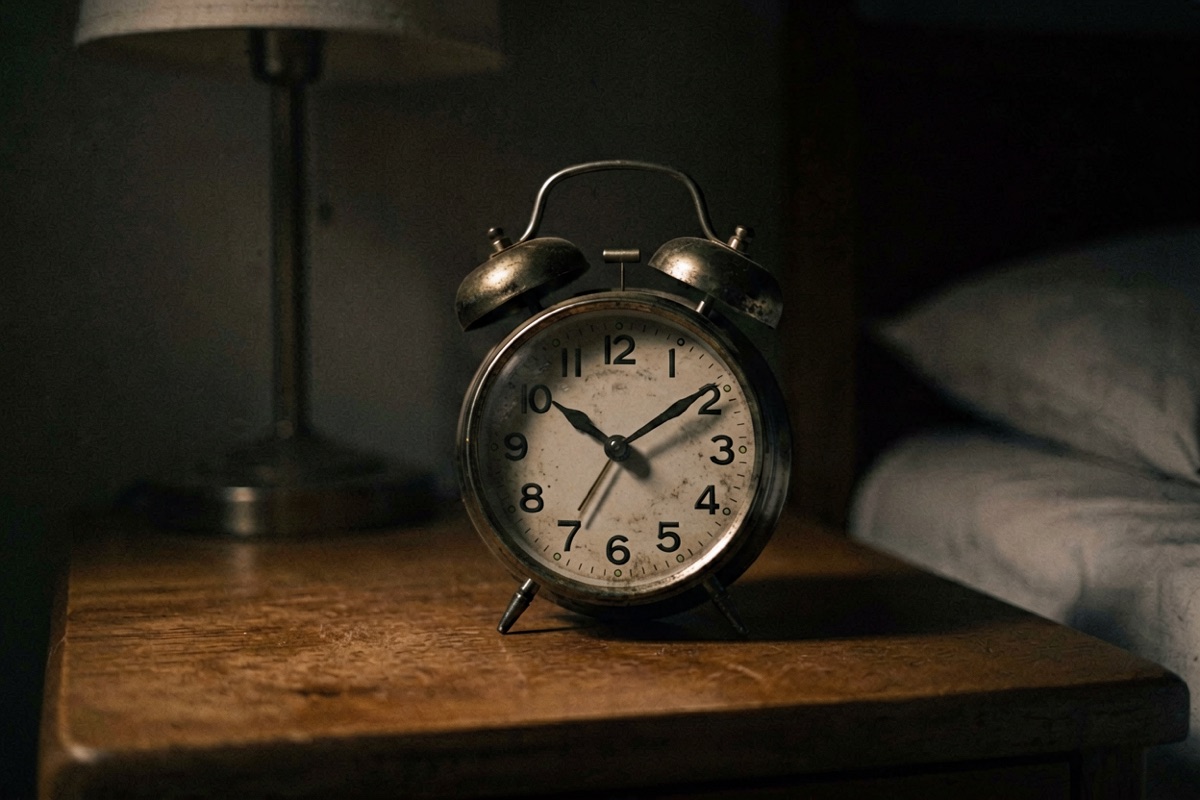
The clock on the bedside table came from her room. It is the old sort and has to be wound.
He stopped winding it. It ran down over two days.
On the third morning he woke and looked at it out of habit.
A quarter past three.
He picked it up and held it to his ear. It is going. He opened the back. The spring is slack, wound all the way down.
An original short story written for our folklore film series. It is fiction — invented, not a recorded case, not a claim about how any of the customs above actually work. The belief it is built on is real; everything that happens in it is not. See our honesty policy。
All twelve periods, what each governs, and how the tradition uses the scheme to time daily habits.
The Full Meridian Clock →FAQ
What does waking at 3am mean in Chinese medicine?
Three to five is the lung's period on the meridian clock, associated in the tradition with grief and with breathing. Practitioners use it as a prompt for questions about what changed, not as a diagnosis.
What is 子午流注?
The assignment of the twelve two-hour Chinese hours to the twelve organ-meridian systems, with qi described as circulating through the sequence and reaching each system at its hour.
What does sleep science say?
Sleep cycles roughly every ninety minutes with normal brief awakenings; core temperature bottoms out in the small hours and cortisol rises from around 2–3am. Stress, alcohol, apnoea, reflux and low mood all produce early-hours waking.
When should I see a doctor?
If it persists, or comes with breathlessness, chest discomfort, snoring with pauses, weight change, low mood or daytime exhaustion. An hour table is not a diagnostic instrument.
Related: Peng Zu's Hundred Prohibitions: One Rule for Every Day · Never Pick Up a Red Envelope From the Road · Free BaZi Calculator · Free I Ching Reading