The Mourning Gate and the Visiting Guest
Most Chinese star names need translating. Two do not. Sang men (丧门), the mourning gate, and diao ke (吊客), the visiting mourner, are among the plainest-named entries in the whole system, and the tradition is direct about what they are held to indicate. They are also annual stars — everyone gets them, in turn, on a fixed rotation.
Annual stars and how they rotate
Chinese astrology distinguishes stars fixed in a person's natal chart from annual stars derived afresh each year from the year's earthly branch. Sang men and diao ke are annual. Their positions are calculated by counting a fixed number of branches forward and back from the current year, which means the assignment moves every year and every branch takes its turn on a regular cycle. This is worth understanding because it deflates the alarm: nobody is singled out. If you are under the mourning gate this year, you are one of a twelfth of the population, and you were last there twelve years ago.
What the reading actually says
Practitioners are more moderate about these stars than their names suggest. The conventional reading is not a death but an involvement with death — attending funerals, handling the affairs of the deceased, visiting the sick, being drawn into other families' losses. Traditional advice attached to the stars is correspondingly mild: avoid unnecessary funeral attendance in that year if you are able, do not visit graves at inauspicious times, take care of your own health. It is a long way from a prediction, and responsible practitioners present it as a caution rather than a forecast.
The extra seat
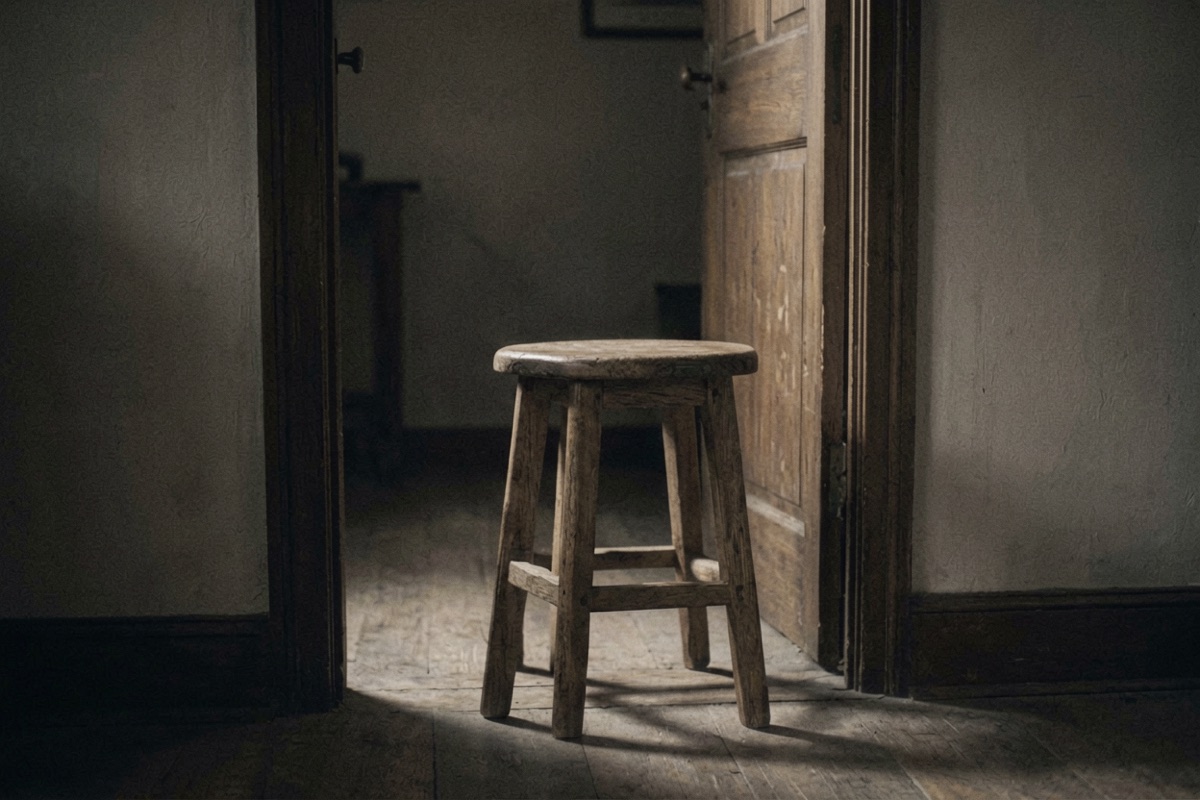
The custom that attaches to the visiting-guest star is domestic and rather affecting. At a wake, an additional stool or chair is set near the door and left empty. Accounts of who it is for vary: the guest who has not been invited, the dead who have no family to mourn them, or the deceased themselves returning. Nobody sits on it, and it is cleared away when the funeral is over. It belongs to the same wide family of Chinese customs as the extra bowl at the table and the food set out at the roadside in the seventh month — the recurring instinct to make a place at a household event for whoever is not accounted for.
Reading star names honestly
The bluntly-named stars are where Chinese astrology most often gets misrepresented, in both directions. On one side, a practitioner who tells a client the mourning gate is on them this year and leaves it there is doing harm for effect. On the other, dismissing the whole apparatus misses what it is — a systematic, rotating, arithmetic vocabulary for talking about the phases of a life, in which the difficult phases have names and are known to pass. The stars rotate. That is the most important structural fact about them, and it is the one that gets left out of the alarming version.
Fiction · Tales of the Hidden Path
The Extra Stool
The year they had the funeral in the house they set out an extra stool by the door, as you do. Nobody sat on it. When it was over it went back into the woodshed.
The following year, on the same date, he opened the door in the morning and the stool was by the door.
He carried it back. Two days later it was by the door again.
In the third year he was up early and it was already there. He split it with an axe and burned it in the stove.
In the fourth year, on that date, there was a new stool by the door. Four legs, mortise and tenon, not a nail in it.
He knew the timber. The old toon tree in the yard, the same grain. He went and looked at the tree. It was whole, the bark unbroken.
He measured the seat height: forty-three centimetres.
He sat on it. His knees came to a right angle and his feet lay flat on the ground. He had measured his own lower leg once, with shoes: forty-three.
There is a worn dip in the middle of the seat, the wood there paler than the rest. He put his hand on it and compared.
It is where he sits.
An original short story written for our folklore film series. It is fiction — invented, not a recorded case, not a claim about how any of the customs above actually work. The belief it is built on is real; everything that happens in it is not. See our honesty policy。
The extra stool is one item in a longer sequence. The lamp that must not go out, the rule about staying awake, and what the vigil is for.
Inside a Chinese Wake →FAQ
What are 丧门 and 吊客?
Annual stars derived from the current year's earthly branch. The mourning gate sits two branches ahead, the visiting guest two behind. They indicate involvement with funerals and mourning.
Does the mourning gate mean someone will die?
No. The conventional reading is involvement with death — attending funerals, handling a deceased person's affairs, visiting the sick. Any practitioner presenting it as a prediction of death is misusing it.
Am I singled out?
No. They are annual and rotate on a fixed cycle, so every branch takes its turn. If you are under the mourning gate this year you are one of roughly a twelfth of everyone, and you were last there twelve years ago.
What is the extra stool at a wake?
A seat set near the door and left empty. Accounts differ on who it is for — the uninvited guest, the dead with no one to mourn them, or the deceased returning. It is cleared away when the funeral ends.
Related: Kong Wang: The Void in a Chinese Birth Chart · The Solitary and Widowed Stars · Free BaZi Calculator · Free I Ching Reading