The Solitary and Widowed Stars
Gu chen (孤辰) and gua su (寡宿) — conventionally the 'solitary star' and the 'widowed star' — are the entries in Chinese astrology that deal with being alone. They are among the oldest star names in use, they are derived from the year or day branch by a simple rule, and they are among the most frequently misused terms in commercial fortune-telling.
The derivation
The twelve earthly branches group into four seasonal triads. For each group, the branch immediately following the group is designated the solitary star and the branch immediately preceding it the widowed star. The rule is mechanical and takes a moment to apply once the groupings are known. As with the void, the arithmetic is not in dispute; what the arithmetic is taken to signify is where the tradition begins interpreting. Practitioners will also weigh the position — which pillar it lands on — and the surrounding chart before saying anything at all.
What it is conventionally read as
The moderate and traditional reading is temperamental rather than predictive: an inclination toward independence, a comfort with one's own company, a tendency to keep counsel, and often an association with study, religious life, art or any pursuit conducted alone. Classical sources link these stars with monastics and scholars, and the association is approving as often as not. Serious practitioners are explicit that the star does not predict being unmarried, and will point out that a chart is read as a whole and that a single star decides nothing.
Where it gets misused
This is one of the terms most abused in commercial fortune-telling, and it is worth naming plainly. Telling an unmarried woman that she carries the widowed star, and offering a remedy for a fee, is a recognisable pattern and a predatory one. It works because it lands on an anxiety the client already has and dresses it as a diagnosis. The traditional literature does not support the usage; the honest reading is a temperament, and no serious practitioner will present a single star as a verdict on somebody's prospects. If anyone tells you this star means you will end up alone, they are selling you the cure.
The extra place at the table
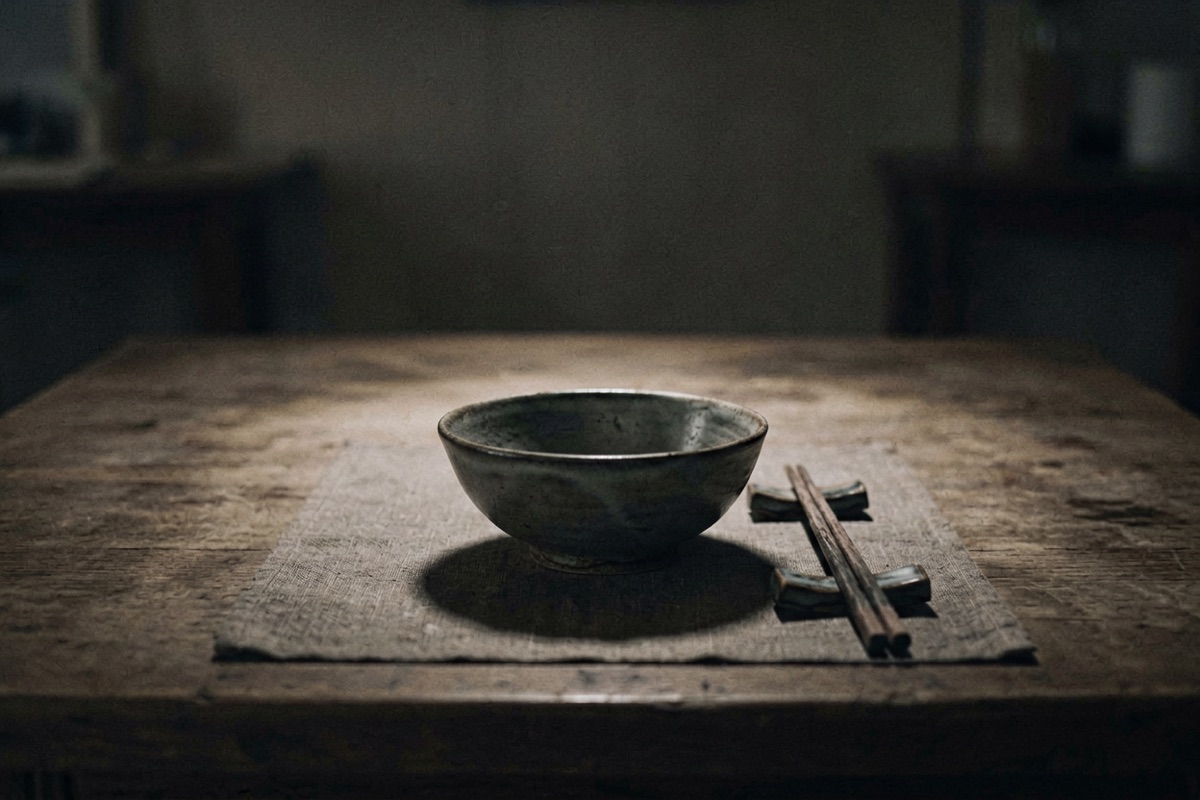
A widespread domestic habit sets out one more bowl and pair of chopsticks than there are people eating. Explanations differ by household: for an absent family member, for the ancestors, for whoever might arrive, or simply because the household once was larger and nobody changed the habit. The last of these is probably the truest and is certainly the most common thing people say when asked. It belongs with the extra stool at a wake and the food set out in the seventh month — the same recurring instinct, expressed in the most ordinary object a Chinese household owns.
Fiction · Tales of the Hidden Path
The Extra Bowl
His mother always laid one more than there were people. Bowl, chopsticks, spoon, at the place on the east side that nobody used.
He asked once as a child. She said there used to be more of them in the house and her hands had never got out of the habit.
After she died he cooked for himself, and laid two. Habit.
One day he washed up and counted the cupboard. Eight bowls. There were seven.
He looked in the sink, the cupboard, the bin. Nothing.
The next day there were six.
By the middle of the year the cupboard was empty. There were always two settings on the table, washed, stacked. He had not washed them.
He tried laying only one and locking the other away in the cupboard. In the morning there were two on the table.
He tried laying none. In the morning there were two, and the bowl at the east place had broth dried in the bottom of it and the chopsticks were resting across the rim.
He went and opened the cupboard. It was locked and the key was in his pocket.
The setting he had locked away was inside, clean, untouched.
An original short story written for our folklore film series. It is fiction — invented, not a recorded case, not a claim about how any of the customs above actually work. The belief it is built on is real; everything that happens in it is not. See our honesty policy。
If you have been told a single star decides your prospects, this is the corrective: how Chinese compatibility is actually assessed.
Compatibility, Properly →FAQ
What are 孤辰 and 寡宿?
The solitary and widowed stars, derived from the year or day branch: for each seasonal triad of branches, the one immediately following is the solitary star and the one immediately preceding is the widowed star.
Does the widow star mean I will be alone?
No. The traditional reading is temperamental — independence, self-sufficiency, comfort in one's own company, often associated approvingly with scholarship and religious life. It is not a prediction about marriage.
Why do I keep being told it is serious?
Because it is one of the most commonly abused terms in commercial fortune-telling: it lands on an existing anxiety and a remedy is then sold. The classical literature does not support that usage.
Why do some households lay an extra place?
For an absent member, for the ancestors, for whoever might come — or, most often, because the household was once larger and nobody changed the habit.
Related: Kong Wang: The Void in a Chinese Birth Chart · The Mourning Gate and the Visiting Guest · Free BaZi Calculator · Free I Ching Reading