Yi Ma: The Travelling Horse Star
Yi ma (驿马) is named after the imperial post-horse system, and it is the star of not staying put. It governs relocation, travel, changes of employment and residence, and — in the reading practitioners give most often — a temperament that becomes restless when nothing is changing. It is one of the easiest stars to recognise in a life.
The post system it is named for
The yi zhan was a network of relay stations spaced along the empire's roads where an official courier could change horses and continue. Versions of it operated from the Qin through the Qing, and at its height under the Yuan it ran to many thousands of stations covering an enormous territory — Marco Polo devotes an admiring passage to it. A post horse existed to be ridden hard for one stage and handed on. The star takes that image exactly: motion as a condition rather than an event, and a life measured in stages between stations.
How it is derived and read
The derivation uses the four seasonal triads of earthly branches; each triad has a designated travelling-horse branch, and a chart containing it carries the star. Practitioners read the position for what kind of movement is indicated: on the year pillar, moving away from one's birthplace and family; on the month, career relocations and transfers; on the day, movement connected to marriage or the spouse; on the hour, travel in later life or on the part of children. The star is also read when the annual branch brings it, which is when practitioners will say a move is 'activated' for that year.
Neither good nor bad
Yi ma is one of the clearest cases in the system of a star whose reading depends entirely on context. Where the rest of the chart supports it, movement is read as opportunity — trade, foreign work, advancement that requires relocation. Where it does not, the same star is read as instability: unable to settle, repeatedly starting over, unable to accumulate anything because nothing stays in one place long enough. Practitioners will not read the star alone, and a reading that treats travelling-horse as simply lucky or simply unfortunate is not doing the traditional analysis.
What it is useful for
As with most stars, the honest value is descriptive rather than predictive. A great many people can say without hesitation whether their life has been a settled one or a moving one, and a surprising number have never articulated it. The star supplies a frame and, more usefully, a question: is the moving something that has happened to you, or something you arrange? People who have relocated twenty times generally have a clear answer, and it is often not the one they expected to give. That is worth more than a forecast of next year's transfer.
Fiction · Tales of the Hidden Path
The Suitcase
Thirty-one years, twenty-seven moves.
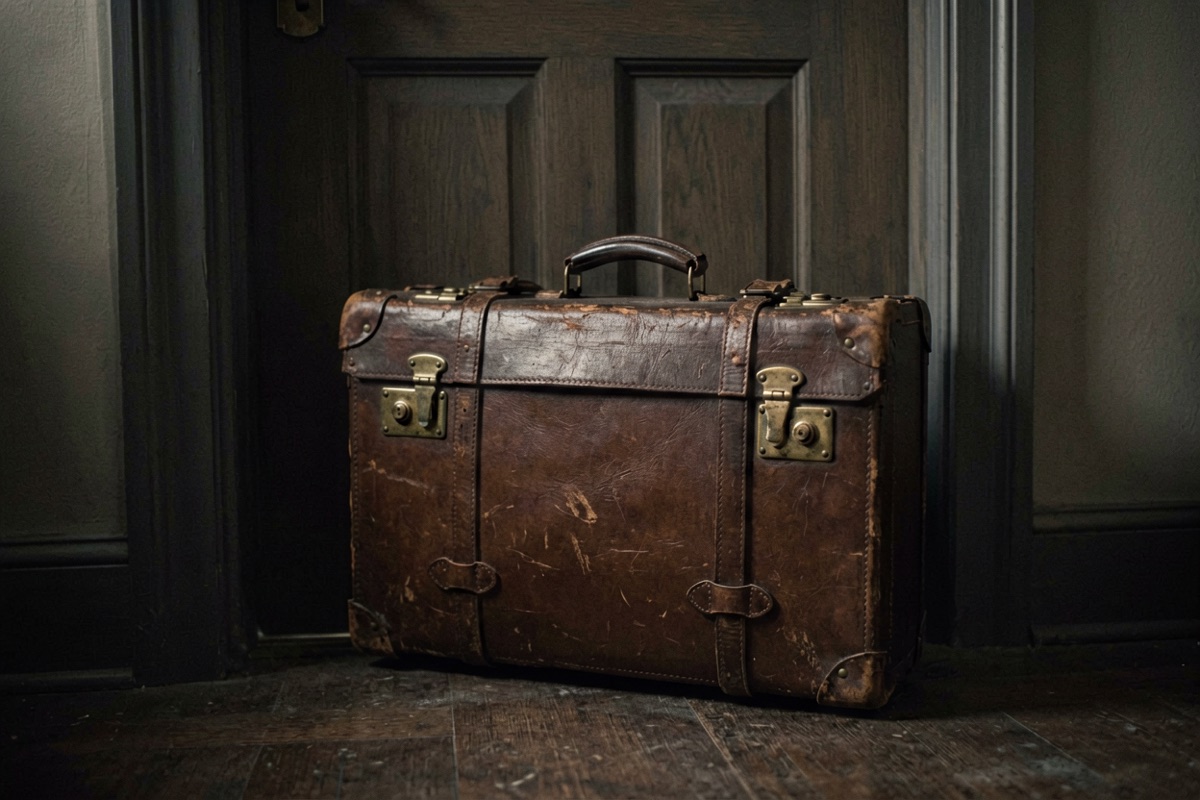
The case came from the first one. Imitation leather, hard shell, two brass catches that still shut tight after thirty-one years.
Empty, it weighs more than it does full.
He weighed it. Packed with clothes and books, fourteen kilos. Emptied out, sixteen. He assumed the digital scale was faulty and bought a mechanical one. Still sixteen.
At fifty-four he decided he was finished moving. He had bought the flat and the mortgage had gone through.
He put the case in the storage cupboard, locked the door, and dropped the key in the estate's rubbish bin.
The next morning he opened his front door and the case was outside it.
There was a luggage tag tied to the handle. New, stiff card, the edges still sharp. A place name printed on it.
He had never been there and had no plans to go.
Three months later the department restructured and he was sent, and the alternative was no job.
In the temporary dormitory at the other end he opened the case. It was empty. On the base lay a luggage tag, yellowed, the corners gone soft.
It had a different place name on it.
He dug out every tag he had kept over thirty-one years and laid them on the bed. Twenty-seven of them. Every one was dated before the day he set off. The earliest was four months before his first move — when the case was still in the shop.
An original short story written for our folklore film series. It is fiction — invented, not a recorded case, not a claim about how any of the customs above actually work. The belief it is built on is real; everything that happens in it is not. See our honesty policy。
The travelling horse is derived from your branches. Build your four pillars free and see where your chart puts it.
Find It In Your Chart →FAQ
What is 驿马?
The post-horse star, derived from the earthly branch by the seasonal triad rule. It governs movement: relocation, travel, transfers, changes of job, and living away from where you were born.
Is it a good star or a bad one?
Neither on its own. With supporting factors it reads as opportunity through movement; without them, as instability and inability to settle. It is not read in isolation.
What was the post-horse system?
The yi zhan, a network of relay stations along the imperial roads where couriers changed horses. It ran in some form from the Qin to the Qing and at its Yuan height covered an enormous territory.
Does it predict a specific move?
No. Practitioners note when the annual branch brings the star and say movement is indicated for that year, but nothing in the system identifies a destination or a date, and claims otherwise should be treated with scepticism.
Related: Kong Wang: The Void in a Chinese Birth Chart · The Mourning Gate and the Visiting Guest · Free BaZi Calculator · Free I Ching Reading